
Precision Stake Adjustments in Live Tennis Deuces Using Calculators
Live tennis betting during deuce sequences presents rapid probability shifts, and calculators enable precise stake adjustments based on updated point-win estimates and expected value metrics. Observers note that extended deuces in matches like those at major tournaments create repeated opportunities for bettors to recalibrate positions using digital tools that process real-time data feeds from scoring systems.
Data indicates these sequences often feature momentum swings where one player wins consecutive points, yet the overall set or match odds adjust incrementally. Researchers have documented patterns where deuce phases extend beyond standard point counts, prompting stake modifications through calculator interfaces that incorporate serve percentages, fatigue indicators, and historical head-to-head records.
Core Mechanics of Calculator Integration in Deuce Scenarios
Calculators designed for live tennis integrate inputs such as current game score, player-specific metrics, and market odds to output recommended stake levels that maintain risk parameters. Studies found these tools apply formulas derived from binomial probability models, allowing users to scale bets up or down as deuce continues without exceeding predefined bankroll thresholds.
What's interesting is how software platforms sync with live score APIs to refresh calculations every point, and this process helps identify when a deuce stretch favors one side due to serving advantages or error rates. Evidence suggests that without such assistance, manual adjustments often lag behind shifting odds, whereas calculator outputs deliver consistent recommendations grounded in statistical projections.
Key Inputs and Outputs During Extended Deuces
- Current point differential within the deuce cycle, combined with player stamina data from recent sets
- Updated serve win probabilities drawn from match-specific analytics feeds
- Market-implied probabilities versus model-derived values that highlight potential edges
- Stake sizing outputs scaled to remaining bankroll and volatility estimates for the sequence
One study revealed that bettors employing these calculators during Australian Open deuce marathons adjusted positions more frequently than those relying on static strategies, and the adjustments aligned closely with evolving point probabilities. Figures reveal average deuce lengths in professional matches hover around four to six points beyond the initial advantage, creating multiple windows for stake recalibration.
Implementation Patterns Across Major Tournaments
During events in August 2026, several professional circuits reported increased adoption of mobile calculator apps among live bettors, particularly in matches featuring baseline rallies that prolong deuces. Those who've studied this know that calculators often factor in surface-specific variables, such as clay court rallies versus grass court quick points, to refine stake suggestions.
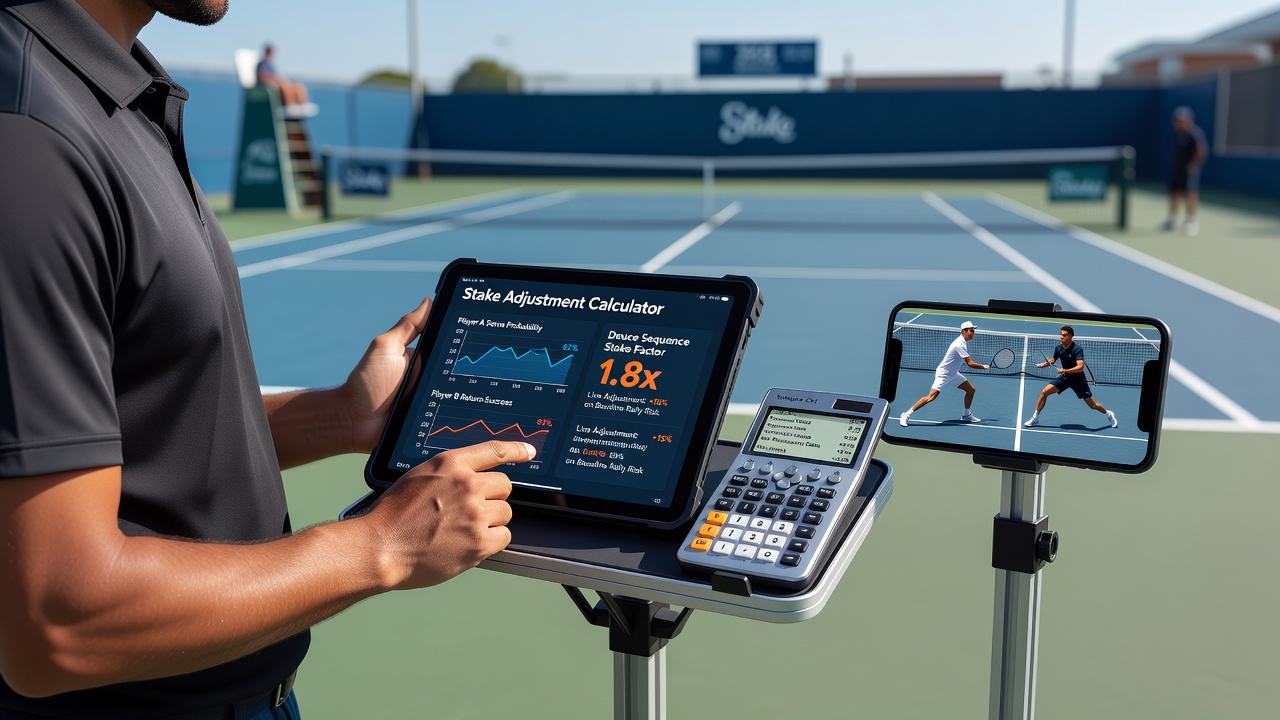
Turns out the integration extends to multi-match portfolios where deuce sequences in one court influence overall exposure calculations across simultaneous events. Academic sources, including a paper from the University of Melbourne on sports analytics, highlight how real-time tools reduce variance in outcomes by enforcing disciplined sizing rules amid fluctuating conditions.
Here's where it gets interesting: regulatory data from the Nevada Gaming Control Board shows live tennis betting volumes rising during grand slam periods, with calculator usage correlating to steadier return profiles in extended games. People often find that combining these tools with pre-match models creates layered approaches that account for both immediate deuce dynamics and longer match trajectories.
Statistical Foundations Supporting Calculator Use
Research indicates tennis deuces follow identifiable distributions where the probability of breaking serve or holding shifts based on prior points played in the game. Calculators apply these distributions through Monte Carlo simulations or simpler recursive formulas to generate stake recommendations that target positive expected value positions.
Industry reports from the European Betting Association note that professional bettors in regulated markets increasingly document their use of such software during live sessions, and the records demonstrate reduced deviation from planned risk limits. What's significant is the ability of these tools to process multiple variables simultaneously, including weather effects on outdoor courts and crowd influence on player focus during critical sequences.
There's this case where experts found calculator-assisted adjustments helped maintain consistent unit sizing even as odds moved sharply after a double fault in a deuce, and similar observations appear in analyses of US Open night matches. Data shows these adjustments typically occur in increments tied to point-win probabilities exceeding five percent thresholds.
Conclusion
Calculator-assisted stake adjustments during live tennis deuce sequences rely on integrated data processing that updates with each point, and this approach supports structured responses to probability changes across professional events. Observers note continued evolution in these tools alongside advancements in scoring technology and analytics platforms, while sources such as the University of Melbourne research and Nevada Gaming Control Board reports provide context on usage patterns and market trends. The methods emphasize objective inputs and outputs that align stake decisions with modeled expectations throughout extended play.