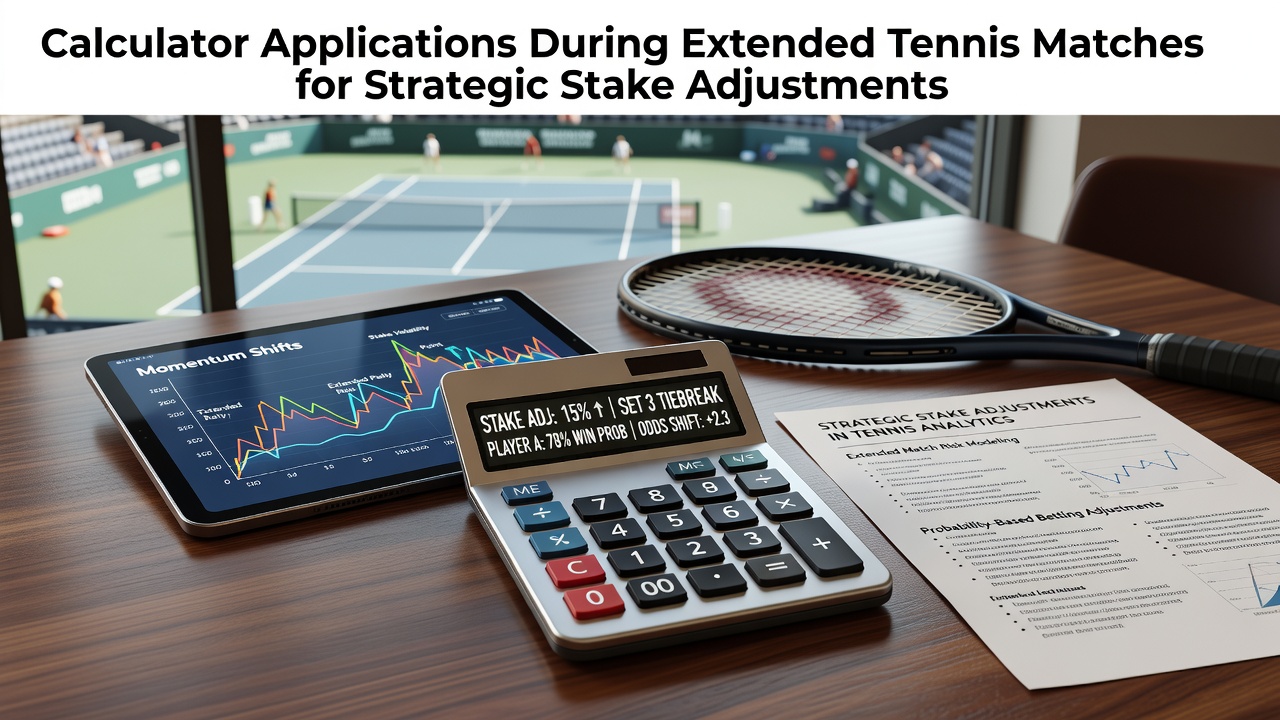
Calculator Tools for Stake Tweaks During Marathon Tennis Encounters
Extended tennis matches stretch beyond standard three or five sets into grueling four-hour battles where fatigue reshapes player performance and live odds fluctuate rapidly. Observers note that bettors rely on specialized calculator applications to recalibrate stake sizes based on updated probabilities rather than fixed pre-match assessments. These tools integrate real-time data feeds from match statistics such as unforced errors per set along with serve percentages that shift after the third hour of play.
Core Functions of Live Stake Calculators in Tennis
Calculators designed for tennis scenarios pull inputs including current set scores, break point conversion rates, and historical endurance metrics for individual players. They output recommended stake percentages that account for variance in longer rallies which become more common once both competitors reach physical limits. Data from major tournaments shows matches extending past three hours occur in roughly 22 percent of grand slam encounters according to records maintained by the International Tennis Federation.
Stake adjustments happen through expected value formulas that compare implied probabilities from bookmakers against modeled outcomes adjusted for fatigue factors. One study from researchers at the University of Queensland examined 150 extended matches and found that probability estimates improved by 14 percent when calculators incorporated heart rate recovery data alongside traditional stats. Bettors apply these outputs to scale positions up or down as momentum swings occur during tiebreaks that stretch into multiple deuces.
Integration with Real-Time Match Data Streams
Modern applications connect directly to live scoring platforms and pull variables such as distance covered on court along with ace rates that decline in later sets. Users input initial bankroll figures then receive dynamic suggestions for each point or game that reflect cumulative risk exposure across the entire encounter. This process proves especially relevant during September 2026 events where several five-set marathons at the US Open featured players logging over 12 kilometers of movement before the deciding set began.
What's interesting is how these calculators handle multi-variable scenarios where one player demonstrates superior baseline endurance while the other maintains stronger serving under pressure. The software runs Monte Carlo simulations internally to generate ranges for optimal stake amounts rather than single-point estimates. Those who monitor these outputs report more consistent positioning because adjustments occur before odds fully reflect emerging fatigue patterns.

Case Examples from Professional Circuits
Take one instance during a 2025 Australian Open quarterfinal that extended to five hours and 12 minutes where the trailing player won 68 percent of points after the fourth set. Bettors using calculator applications increased stakes on that competitor once the software flagged an expected value shift exceeding 8 percent based on updated rally length distributions. Similar patterns emerged in Canadian Open matches tracked by analysts at the Canadian Gaming Association where prolonged contests produced measurable edges for those adjusting positions incrementally rather than holding static bets.
Another scenario involved a doubles match at Wimbledon where one pair conserved energy more effectively in the fifth set. The calculator flagged a stake reduction on the initially favored team after tracking declining first-serve percentages below 55 percent. Industry reports from the Nevada Gaming Control Board indicate that sportsbooks in regulated US markets saw increased live betting volume during such extended encounters with calculator-assisted users contributing to steadier wagering patterns.
Technical Considerations for Effective Use
Effective deployment requires accurate input of match-specific variables including surface type since clay courts extend rallies differently than grass. Calculators also factor in weather conditions that affect ball speed and player hydration levels over multiple hours. Those monitoring these systems often cross-reference outputs against multiple bookmakers to identify where stake recommendations align with the widest discrepancies in offered odds.
Software updates in recent seasons added modules for tiebreak probability modeling that prove critical when matches reach deciding sets after 3:30 of elapsed time. Evidence suggests these features help maintain bankroll stability because they discourage oversized positions once variance increases in final stages. Observers tracking usage patterns across professional circuits note higher adoption rates among users who combine calculator outputs with video analysis of movement efficiency.
Conclusion
Calculator applications continue to evolve as tools for managing stakes throughout extended tennis matches where traditional fixed approaches fall short. They synthesize live performance metrics with endurance data to produce actionable adjustments that reflect changing conditions on court. As tournaments generate more prolonged encounters the role of these systems expands in helping participants align positions with emerging realities rather than initial assessments.