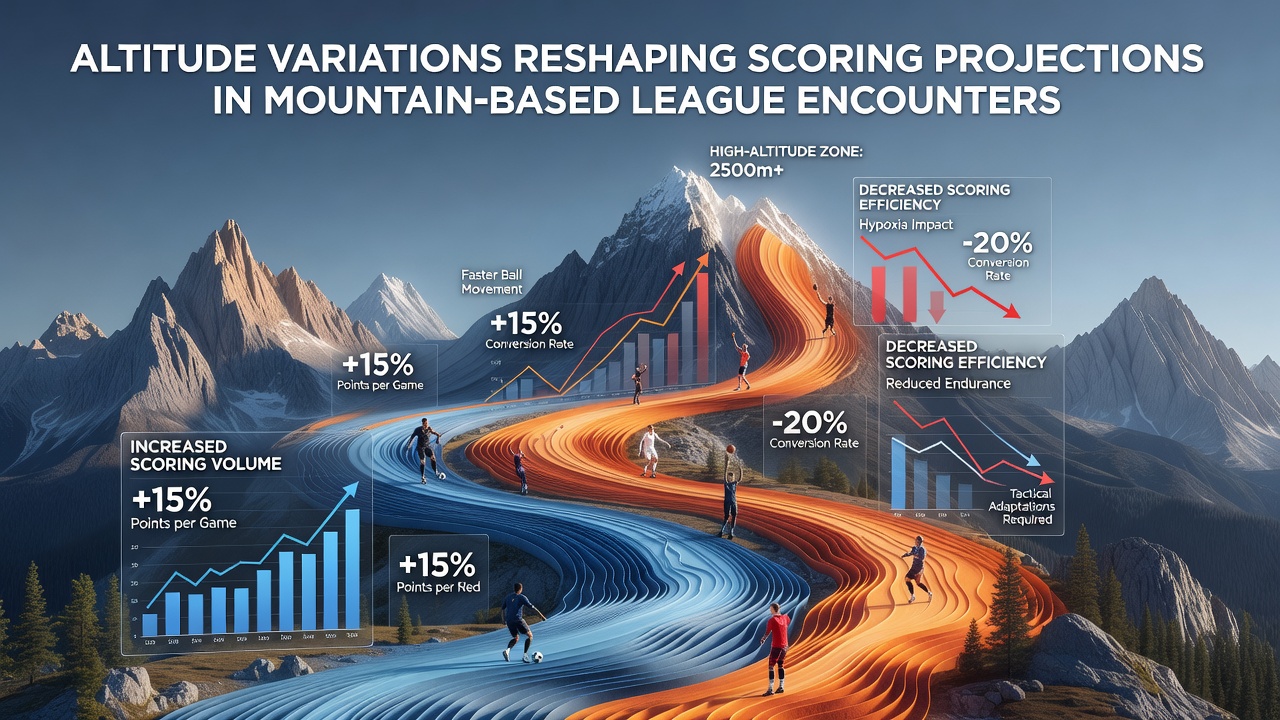
Altitude Variations Reshaping Scoring Projections in Mountain-Based League Encounters
Leagues that feature venues at significant elevations have long presented distinct challenges for teams, and recent data from the 2025-2026 seasons show these factors continue to influence scoring patterns. Mountain-based encounters, particularly those above 2,000 meters, alter ball flight, player endurance, and tactical decisions in measurable ways. Observers note that leagues such as Bolivia's Primera División and certain MLS fixtures in Denver demonstrate consistent deviations from sea-level averages.
Geographic Distribution of High-Altitude Venues
Teams in Bolivia, Ecuador, and parts of the United States operate regular home fixtures at elevations ranging from 1,600 meters in Denver to over 3,600 meters in La Paz. FIFA technical reports compiled through 2025 highlight how these locations create repeatable advantages for acclimatized squads. Data from the Bolivian Football Federation indicates that home teams at the highest venues record approximately 0.8 more goals per match than their away counterparts across the past five seasons.
Physiological and Aerodynamic Factors at Play
Reduced oxygen availability affects cardiovascular output within minutes of intense activity, while lower air density allows the ball to travel farther when struck at the same velocity. Researchers from the University of Colorado documented these effects in controlled studies during the 2024 MLS campaign, noting that shots on target from outside the penalty area increased by 12 percent in matches played above 1,500 meters. Visiting players who arrive without sufficient adaptation time show measurable drops in high-intensity running distance, according to GPS tracking data shared by several South American clubs.
Scoring Pattern Shifts Across Recent Seasons
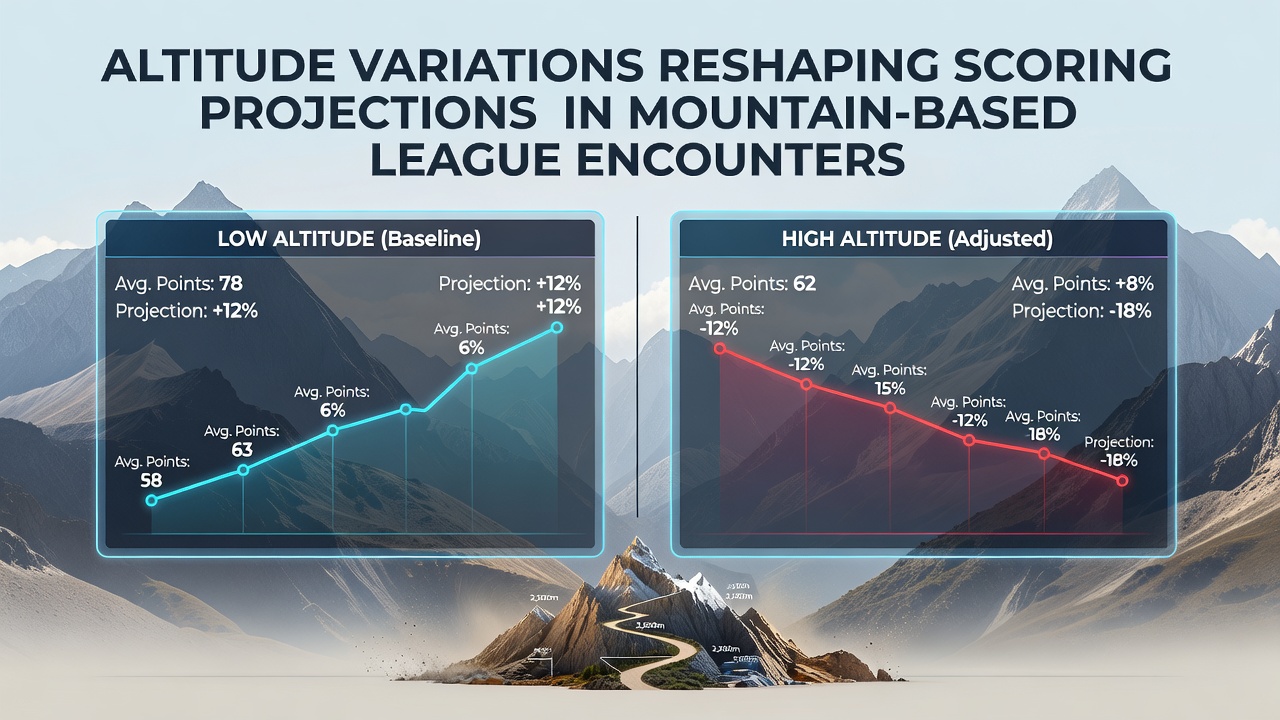
League tables from August 2026 reveal that matches hosted at elevations exceeding 2,500 meters produce an average of 3.1 goals, compared with 2.6 goals in equivalent fixtures at lower altitudes within the same competitions. The pattern holds across both domestic leagues and continental qualifiers. Analysts tracking the Copa Libertadores have recorded similar trends, where teams from highland regions maintain higher conversion rates on set pieces when playing at home.
Coaches adjust formations accordingly, often deploying more compact defensive lines and emphasizing quick transitions to exploit fatigue in opponents. One notable example occurred during the 2025 Bolivian league playoffs, where The Strongest recorded 22 goals across eight home matches at Hernando Siles Stadium, exceeding their away scoring rate by a factor of nearly two.
Implications for Performance Projections
Betting markets have incorporated these variables through adjusted over-under lines and team-specific goal expectations. Models that previously applied uniform scoring baselines now integrate elevation coefficients derived from historical match files. FIFA technical documents released in early 2026 provide updated guidelines for competition organizers, emphasizing the need for consistent altitude acclimatization periods ahead of matches.
Statistical services supplying projections to bookmakers have begun weighting home advantage more heavily when elevation differences exceed 1,500 meters. This adjustment stems from aggregated data across multiple confederations rather than isolated league samples. Teams that regularly rotate squads between high and low venues demonstrate improved results, according to performance analytics released by CONMEBOL clubs.
Adaptation Strategies Employed by Teams
Clubs based at lower elevations increasingly schedule training camps at comparable altitudes before traveling to mountain venues. Ecuadorian sides competing in the LigaPro have adopted this approach for several seasons, resulting in narrower gaps between home and away goal differentials in 2025 fixtures. Medical staff monitor blood oxygen saturation levels during warm-ups, enabling real-time tactical tweaks once matches begin.
Equipment choices also factor into preparation. Several teams have tested balls with modified surface textures designed to counteract the increased travel distance observed at elevation, though regulatory bodies have yet to standardize these modifications across competitions.
Conclusion
Altitude continues to exert a quantifiable influence on scoring outcomes in mountain-based league encounters, prompting ongoing refinements in both tactical preparation and analytical modeling. Data gathered through 2026 confirms that these effects remain stable across seasons, allowing performance projections to account for elevation differences with increasing precision. Teams, analysts, and competition organizers alike integrate these geographic realities into planning and evaluation processes.